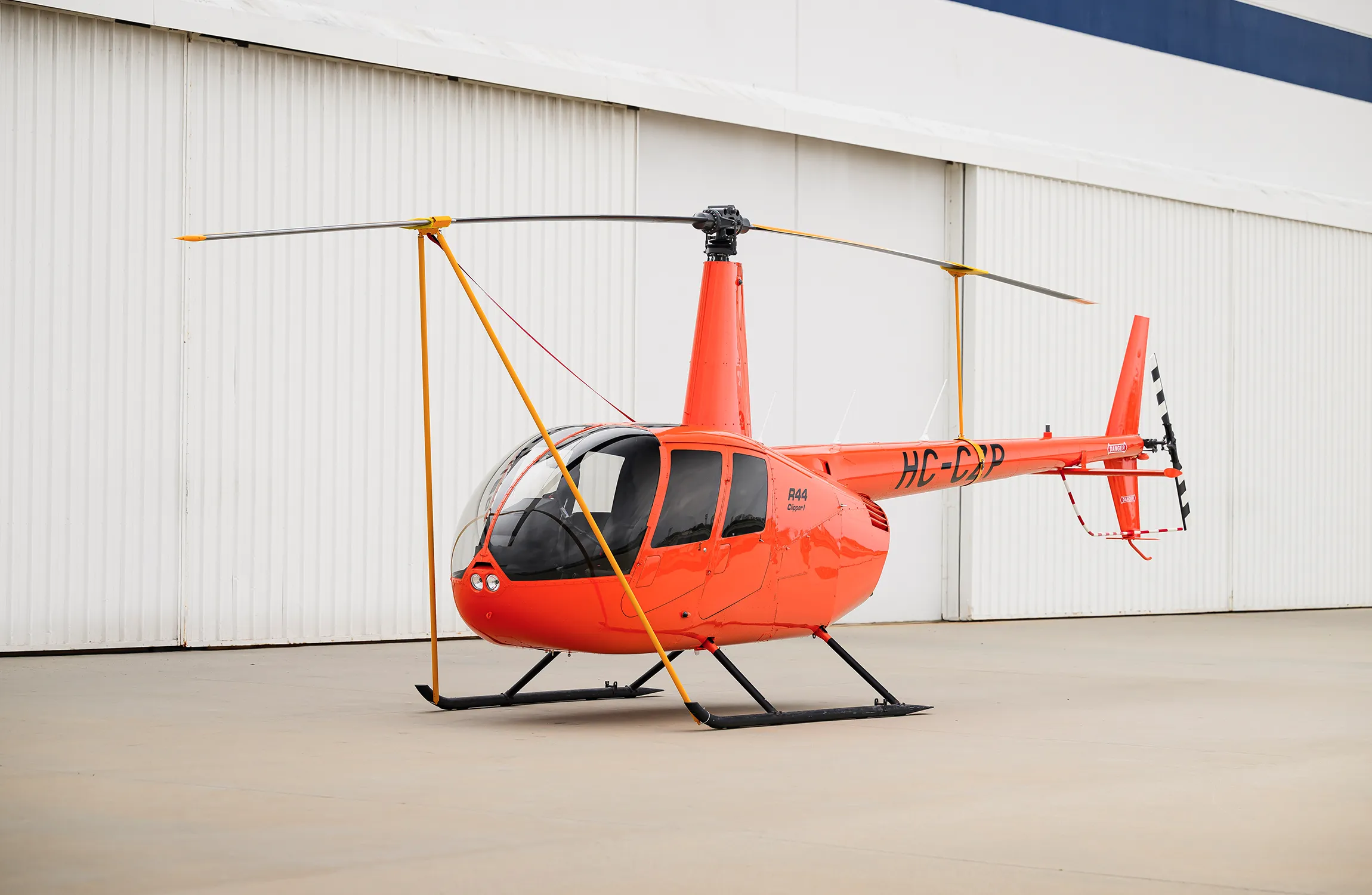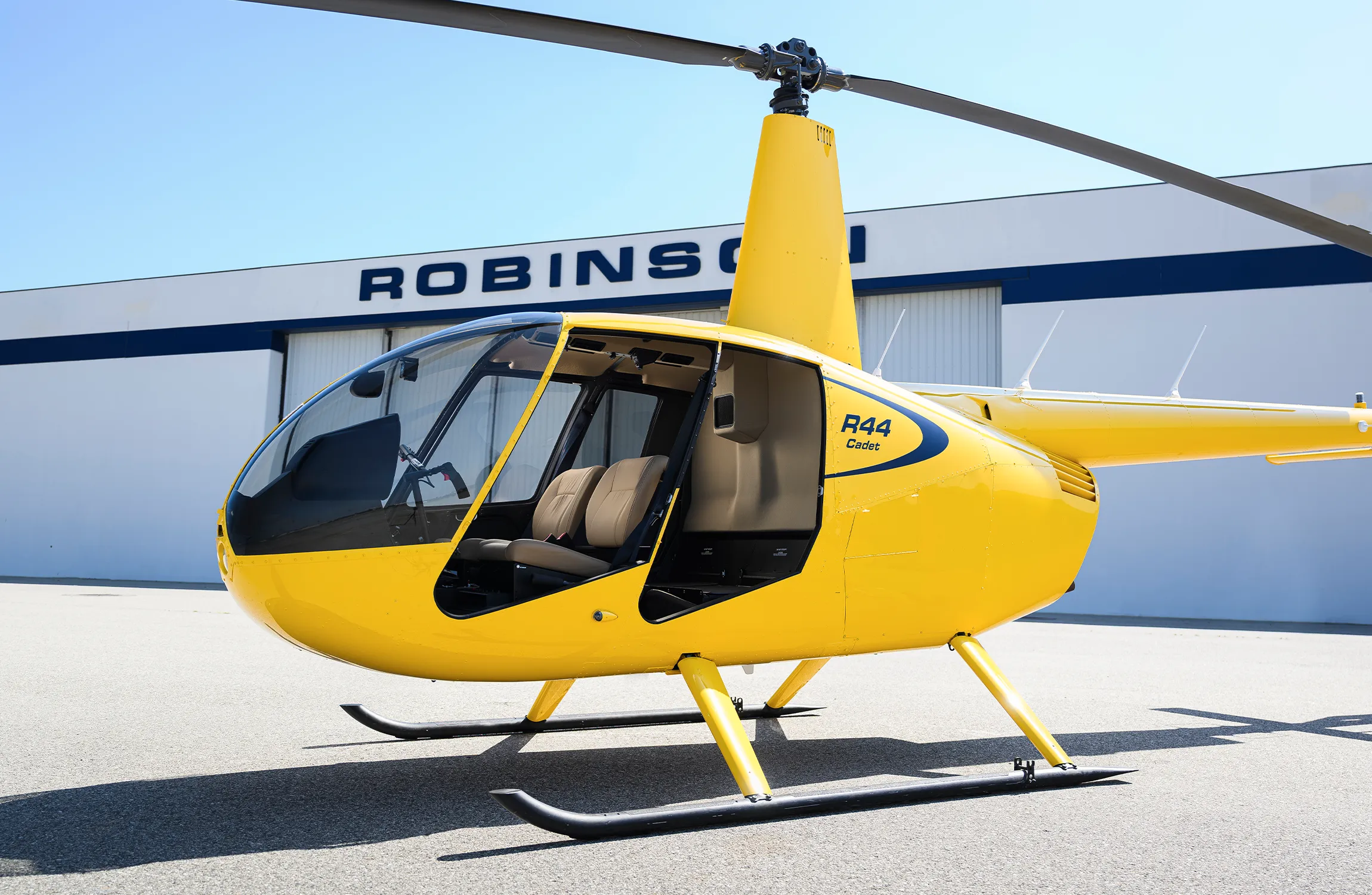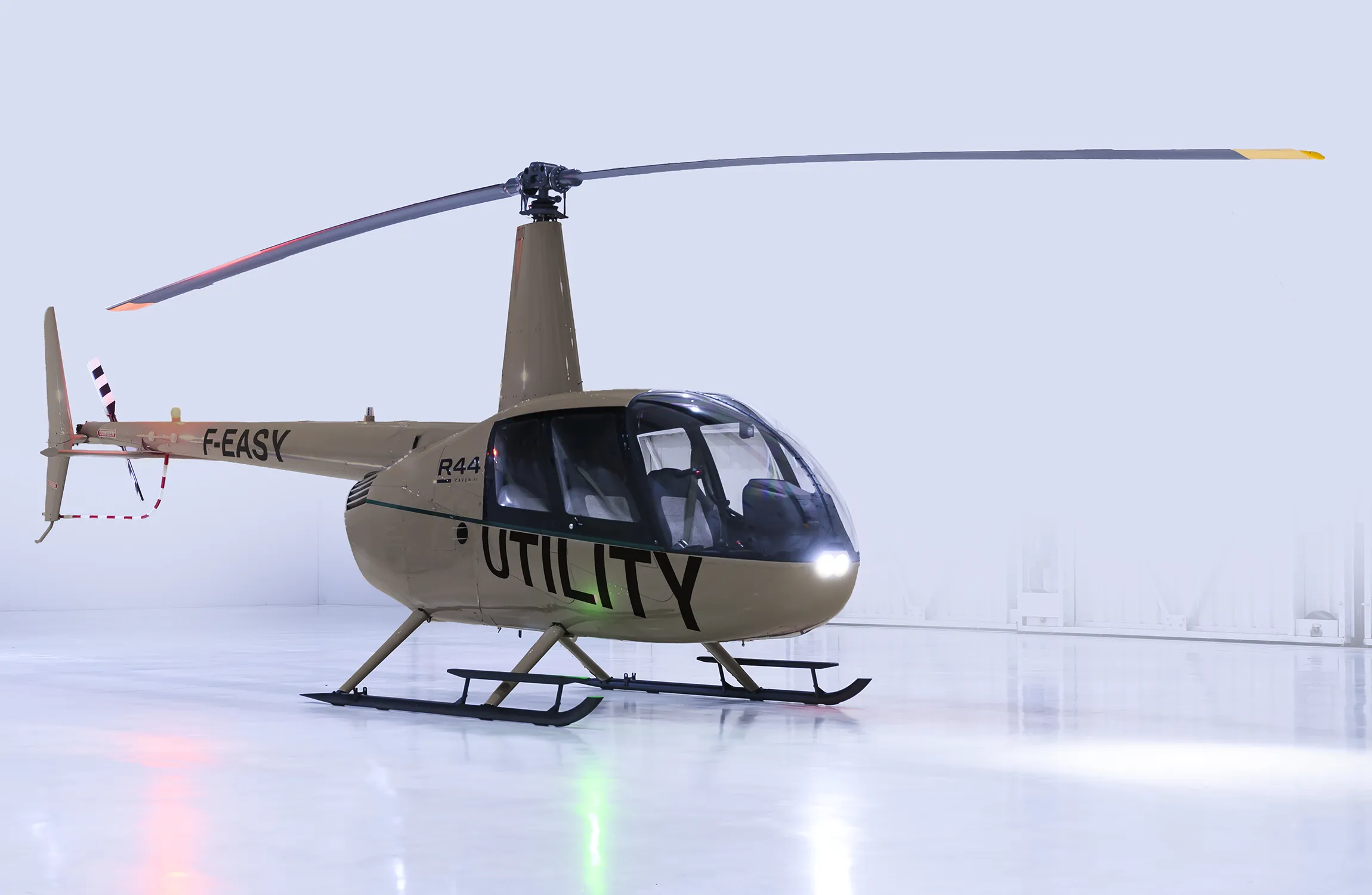
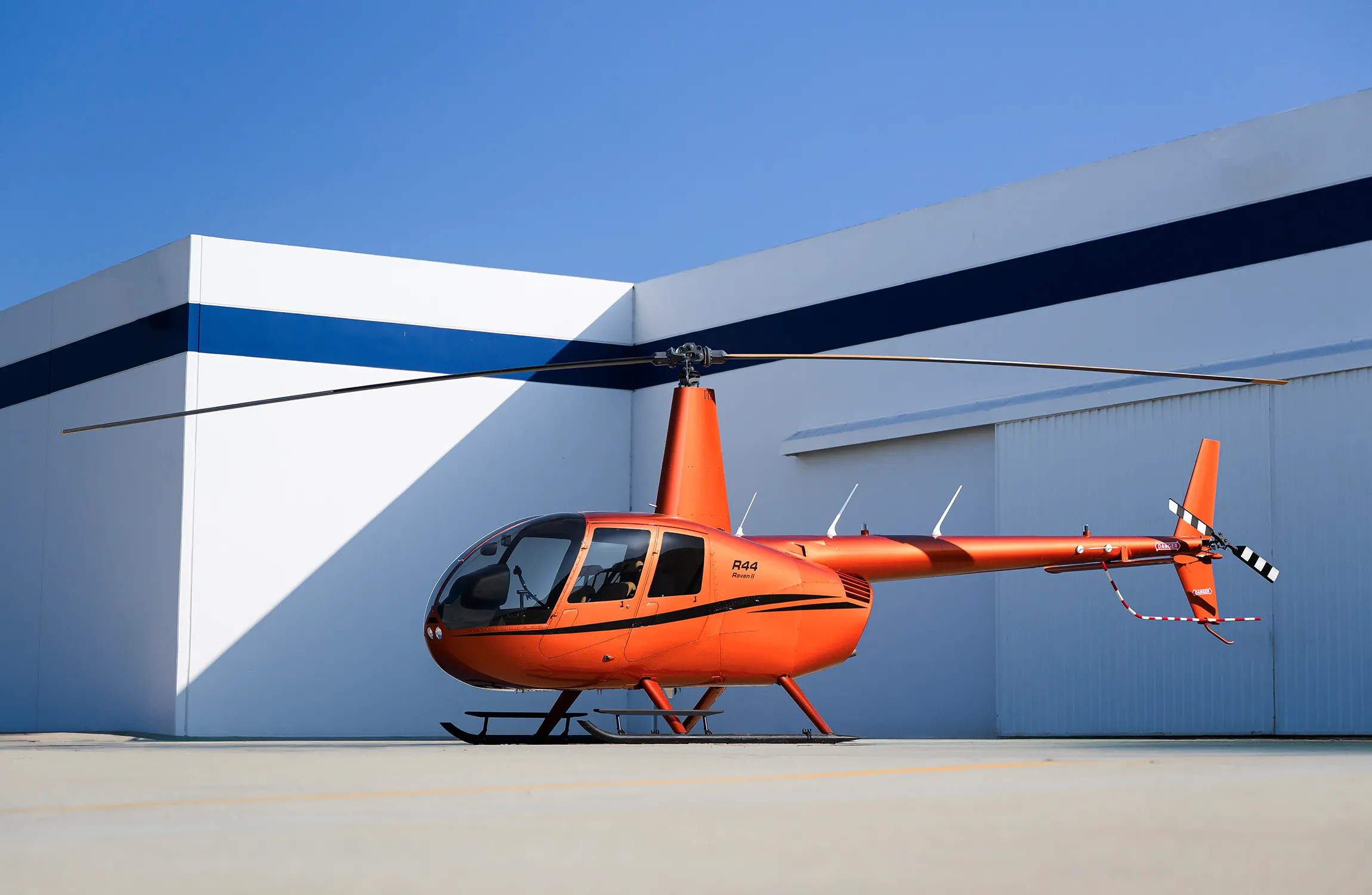
R44 Raven II / Clipper II
Four seats, infinite possibilities.
Renowned for its versatility, the R44 series helicopters can be configured in multiple ways — perfect for just about any application, including missions in and around water. About the R44 Raven II / Clipper II
Any mission. Every mission. Like all Robinson helicopters, the R44 Raven II and Clipper II are easy to maintain, inexpensive (by helicopter standards) to own and operate, and known for steadfast performance. What makes them stand out is their remarkable versatility.
Standard features include a two-bladed rotor system, streamlined instrument panels and a crashworthy fuel system. An aluminum monocoque and powder-coated steel tube structure provide a lightweight yet robust airframe, while the aerodynamic fuselage optimizes airspeed and fuel economy. Hydraulically boosted controls eliminate cyclic and collective feedback forces and provide responsive handling. A low tail-rotor tip speed and large cambered tail help reduce flyover noise.
The Raven II and Clipper II are powered by Lycoming’s IO-540 fuel-injected engine. The IO-540 delivers improved altitude performance, increased payload capability up to 2,500 lb (1,134 kg), and eliminates the need for carburetor heat.
The patented cyclic design offers increased safety, comfort and ease of operation for pilots:
- Minimizes the risk of interference from passengers or objects in the cockpit.
- Requires minimal physical effort to operate, reducing pilot fatigue during long flights.
- Eliminates the need for dual independent controls, simplifying operation and reducing mechanical complexity.
The Clipper II may be equipped with either fixed utility or pop-out floats, providing additional safety for over-water travel. Designed for emergency situations, pop-out floats inflate within 2–3 seconds of activation. When not in use, they roll up and stow in protective covers along the aircraft’s landing skids. The streamlined low-profile design minimizes drag and allows easy entry and exit of the cabin.
Fixed utility floats remain fully inflated, add approximately 50 lb (23 kg) to the aircraft’s empty weight and reduce cruise speed by approximately 10 knots.